Pakistan, ranked high among the countries at risk from climate-induced disasters, is experiencing increasingly severe climatic events, over years. Quality education, the basic human right, is crucial for sustainable development, and vulnerable children affected by crisis and emergencies in regions like Balochistan need it the most.
Education Cannot Wait (ECW), the United Nations global fund for education in emergencies and protracted crises, financed and supported the Multi-Year Resilience Programme (MYRP) in Pakistan, for improving access to inclusive and equitable quality education for refugees, crisis affected and out-of-school (OOS), marginalised and vulnerable children by providing “whole-of-child” solutions, through consortia led by RSPN, UNICEF and VSO. RSPN managed and implemented MYRP in Panjgur, Kohlu and Loralai districts of Balochistan, through support of our implementing partner, Balochistan Rural Support Programme (BRSP), and Government of Balochistan.
Location: BALOCHISTAN, Loralai District, Panjgur District & Kohlu District
Sector: Education
Implementing Partner: Balochistan Rural Support Programme (BRSP)
Lead Grantee: Rural Support Programmes Network (RSPN)
Duration: 48 Months
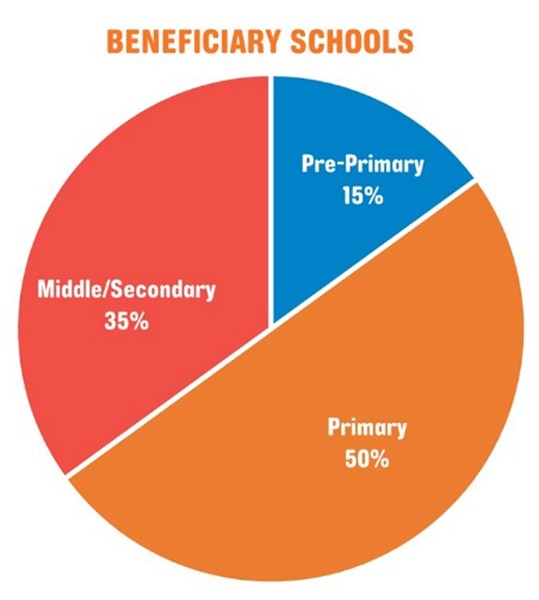
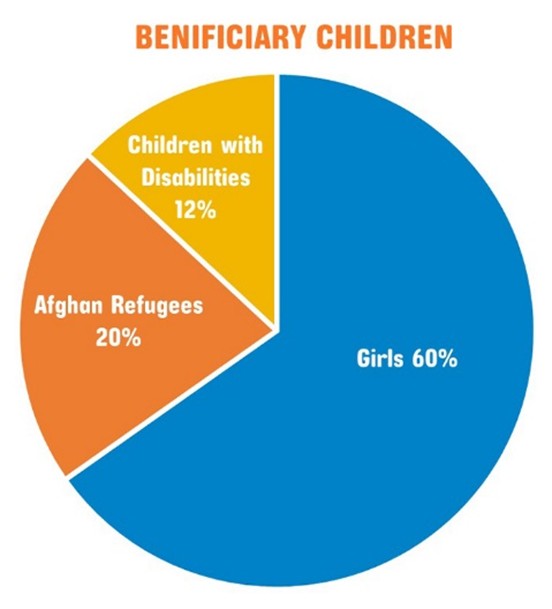
The programme significantly improved the government schools and contributed to improving the educational awareness and delivery through community support. MYRP teams reached 49,682 out-of-school (OOS) children, adolescents, and students, including 26,828 girls through formal and non-formal education in programme’s select government schools in Kohlu, Loralai and Panjgur districts. The programme improved teaching-learning conditions through school improvement projects, student focused activities and educational reforms. MYRP ensured safe and protective interventions, nurtured mental and physical well-being, build capacity of teachers and education authorities, raised awareness, improved access to education by ensuring safe, protective, friendly and healthy schooling, addressed barriers being faced by girls and boys, including Afghan refugee children, adolescents and those living with disability, and developed resilience of education system for sustainability.
Improving Access to inclusive and equitable quality education for refugees, crisis affected and out-of-school, marginalized and vulnerable girl and boy children and adolescents by providing “whole-of-child” solutions.
| Indicator | Achievement |
| Government schools supported | 150 |
| Children reached out and enrolled | 49,682, including 26,828 girls |
| Established and officially handed-over early childhood education (ECE) centres to government | 106 ECE centres |
| Established Accelerated Learning Programme (ALP)/Non-formal Education (NFE) centres | 214 |
| Teachers trained | 900 |
| Community members’ awareness raising | 16,182 sessions; 181,981 participants, including 89,388 women |
| Parent Teacher School Management Committees (PTSMCs) reactivated | 1,010 PTSMCs; 5,626 members, including 1,928 women’s |
| Menstrual hygiene management (MHM) kits | 2,700 girls received MHM kits 400 MHM corners set-up in schools |
| School champion clubs | 227 clubs; 2,270 members; 57% girls’ schools |
| Transportation/school commuting support | 300 girls |
| Educational financial report | 600 girls |
| Vocational training courses (Stitching, computer, embroidery) | 100 girls participated in courses. |
| Children’s/students’ health screening; provision of assistive devices | 1,838 children’s health screening; 919 children, including 337 girls received assistive devices (hearing aids, glasses, wheelchairs). |
| Rehabilitation of latrines, hand wash facilities | 391 |
| Ramps constructed | 150 |